
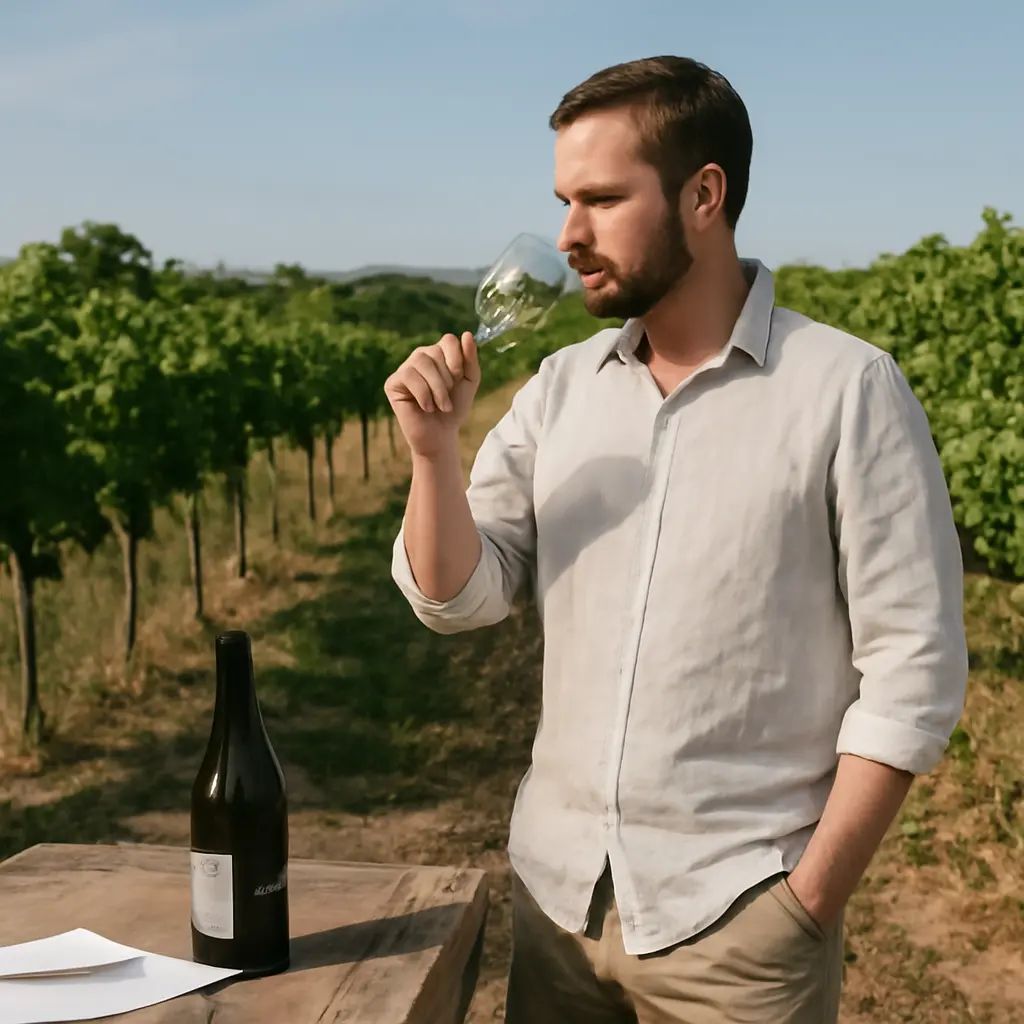
Sauvignon Blanc is a white wine grape variety whose fresh, grassy, and sometimes tropical aromas arise partly from volatile compounds formed in the grape and released during winemaking. Research has linked its characteristic “green” notes to methoxypyrazines, especially 3-isobutyl-2-methoxypyrazine (IBMP), while thiols contribute aromas such as grapefruit, passion fruit, and boxwood. The balance depends on vineyard conditions, grape ripeness, and cellar choices—so cut grass is a chemical clue, not a flavor present in every bottle.
Sauvignon Blanc aroma chemistry explains its grassy character
Wine aroma is the combined perception of volatile molecules that evaporate into the air and stimulate the nose. The International Organisation of Vine and Wine (OIV) describes wine sensory analysis as the assessment of its appearance, aroma, and taste; in practice, aroma reflects many compounds interacting rather than a single “Sauvignon Blanc molecule.” Among the best-studied contributors to the variety’s green, vegetal character are methoxypyrazines, especially IBMP.
Methoxypyrazines are associated with green aromas
Methoxypyrazines are nitrogen-containing aroma compounds found naturally in grapes. IBMP is often described as smelling of green bell pepper, leafy vegetation, or cut grass. Researchers at the University of California, Davis, and other wine-science institutions have studied how strongly these compounds can affect perception at very low concentrations. Their impact depends on concentration, the wine’s other aromas, and the taster: a green note that seems vivid in one wine may be subtle or masked in another.
The grassy impression is therefore not proof that grass was added to the wine. It is a sensory association produced by volatile compounds. Nor is “grassy” a single precise chemical category: tasters may use it for fresh-cut lawn, crushed leaves, green pepper, or herbal notes, even though those descriptions can reflect different mixtures of molecules.
Thiols add citrus and tropical-fruit contrasts
Volatile thiols are sulfur-containing compounds that can create powerful fruity aromas. In Sauvignon Blanc, 3-mercaptohexan-1-ol (3MH) is associated with grapefruit and passion fruit, while its acetate, 3-mercaptohexyl acetate (3MHA), is commonly linked to passion fruit and other tropical-fruit notes. These compounds help explain why Sauvignon Blanc can smell grassy and fruity at once.
The thiols do not simply cancel out methoxypyrazines. Instead, the overall aroma emerges from their relative levels and interactions with other wine constituents. A bottle with noticeable green character may still show citrus, gooseberry, or tropical fruit; style varies with vineyard and production choices.
Grape growing shapes Sauvignon Blanc’s green aroma
A grape’s aroma potential develops in the vineyard. Sunlight, temperature, canopy density, water availability, and harvest timing influence grape growth and the compounds that later contribute to wine aroma. New Zealand Winegrowers notes that Sauvignon Blanc is the country’s dominant wine-grape variety, and Marlborough’s wines are widely recognized for expressive citrus, herbal, and tropical-fruit profiles. Those regional signatures reflect both local growing conditions and deliberate winemaking, not one universal recipe.
Canopy and sunlight affect methoxypyrazines
The grape canopy—the leaves and shoots surrounding clusters—controls how much light and heat reach the fruit. Research published in the Australian Journal of Grape and Wine Research has examined the relationship between vineyard exposure and methoxypyrazine levels. In general, greater exposure and warmer fruit-zone conditions can reduce green aroma compounds, though the outcome depends on site, season, and vineyard management.
Growers can adjust leaf removal and shoot positioning to change cluster exposure. These practices involve trade-offs: excessive exposure can raise the risk of sunburn or overly rapid ripening, while dense shade may preserve stronger vegetal notes. Vineyard decisions aim for a desired style while protecting fruit quality, rather than removing all green character.
Ripeness and harvest timing influence flavor balance
Harvest timing affects both the fruit’s sugar and acidity and the balance of aroma compounds. Picking earlier can preserve brisk acidity and a more herbal or green impression; later picking can encourage riper fruit character. These are tendencies, not guarantees, because weather, vineyard location, and cellar practices also matter.
A useful comparison is the difference between a lean, herbaceous Sauvignon Blanc and a riper, more tropical style. The first may emphasize freshness and leafy notes; the second may foreground passion fruit, melon, or citrus. Both can come from the same grape variety, illustrating how site and harvest choices shape its expression.
Winemaking preserves or changes Sauvignon Blanc aroma
Winemaking affects how aroma compounds are extracted, transformed, retained, and perceived. Sauvignon Blanc is often fermented in stainless steel to preserve fresh fruit character, though producers also use barrels, lees contact, or blending to create texture and complexity. The OIV’s international standards cover wine production and analysis, while research in wine chemistry shows that fermentation conditions can influence the release of aroma-active compounds.
Fermentation releases aroma precursors
Some fruity thiols exist in grapes in bound, nonvolatile forms called precursors. Yeast activity during fermentation can release the aromatic forms, helping produce grapefruit or passion-fruit notes. Yeast strain, fermentation temperature, oxygen exposure, and handling can influence the resulting aroma profile. This helps explain why grapes from similar vineyards can become wines with different balances of fruit and herbaceous character.
The aroma compounds are present at small concentrations, but perception depends on odor thresholds and the surrounding mixture. A molecule can be important to aroma even when present in trace amounts, while another compound at a higher concentration may contribute less strongly to the smell.
Temperature, oxygen, and aging shape freshness
Cool fermentation is commonly used to help retain volatile aromas, and stainless-steel tanks limit the influence of oak. Oxygen management also matters because some aroma compounds can be lost or altered through oxidation. These choices generally support a crisp, fruit-forward style, but producers may intentionally use barrel fermentation or lees contact for a rounder texture.
Sauvignon Blanc is often enjoyed young, when its fresh fruit and herbal aromas are prominent. Some examples can develop with bottle age, but the pace and result depend on the wine’s structure, closure, storage, and producer intent. A grassy note may soften or shift over time rather than remain fixed.
How to recognize grassy notes in a glass of Sauvignon Blanc
Tasting language is a practical way to connect chemistry with experience. The aroma of any wine is subjective, and no single descriptor identifies a specific compound with certainty. Still, comparing green, citrus, and tropical-fruit impressions can help explain why Sauvignon Blanc varies from bottle to bottle.
Use a simple aroma comparison
To explore the contrast, smell the wine before tasting and consider which family of aromas stands out. Fresh-cut grass, green pepper, and leafy herbs suggest a greener impression; grapefruit, lime, and passion fruit suggest brighter fruit notes. These are sensory descriptions, not laboratory measurements, but they offer a useful way to compare styles.
- Serve the wine cool, but not so cold that its aromas are difficult to detect.
- Swirl gently, then smell again to notice whether herbal or fruit aromas become more apparent.
- Compare wines from different regions or producers, paying attention to ripeness, acidity, and aroma balance.
Green character is not automatically a flaw
A grassy or leafy note can be an intentional and appealing part of Sauvignon Blanc’s style. It becomes a concern only if the wine is unbalanced or shows undesirable aromas associated with faults, such as pronounced vinegar-like acidity or mustiness. “Green” by itself does not mean the wine is spoiled, and preference varies: some drinkers seek crisp herbal freshness, while others prefer a riper, fruit-led expression.
Conclusion: Sauvignon Blanc’s cut-grass aroma has a chemical basis
Sauvignon Blanc can smell like cut grass because methoxypyrazines—particularly IBMP—contribute green, leafy, and pepper-like aromas. Thiols add grapefruit and tropical-fruit notes, while vineyard exposure, ripeness, fermentation, and oxygen management influence the balance. The result is a spectrum of styles, from herbaceous and crisp to intensely fruity. Next time you open a bottle, compare its green and fruit aromas and consider how its origin and production may have shaped them.
Sources: University of California, Davis, “Methoxypyrazines in Wine,” https://wineserver.ucdavis.edu/industry-info/enology/fermentation-management-guides/methoxypyrazines-wine; Australian Journal of Grape and Wine Research, “The effect of sunlight exposure on methoxypyrazine concentrations in Sauvignon Blanc grapes and wine,” https://onlinelibrary.wiley.com/doi/10.1111/j.1755-0238.2008.00017.x; New Zealand Winegrowers, “New Zealand Winegrowers Annual Report 2024,” https://www.nzwine.com/en/media/statistics/; International Organisation of Vine and Wine, “International Code of Oenological Practices,” https://www.oiv.int/standards/international-code-of-oenological-practices