
Red wine that turns brown can be showing normal development, oxidation, or a fault—not a dependable verdict on age or quality by itself. Color changes as red-wine pigments evolve, and a tawny or brick edge can occur in mature bottles; however, sudden browning, especially with a flat, bruised-apple smell, may signal damaging oxygen exposure. The useful clues are the wine’s age and storage history, the appearance of the color change, and its aroma and taste together. Understanding those clues helps distinguish graceful maturation from spoilage and decide whether a bottle is worth drinking.
Red Wine Color as an Age and Quality Clue
Red wine gets its color mainly from anthocyanins, pigments in grape skins. During fermentation and bottle aging, these pigments interact with tannins and other compounds, forming more stable colored molecules and eventually larger compounds that can settle out as sediment. The University of California, Davis, Department of Viticulture and Enology describes anthocyanins and tannins as key contributors to wine color and structure. As a result, a young red often looks purple or ruby, while some older reds shift toward garnet, brick, or tawny hues.
Color is a clue, not a quality score. Grape variety, winemaking, acidity, age, bottle format, and storage conditions all influence how a wine looks. A lighter-colored Pinot Noir may be perfectly sound, while a deep-colored wine can be oxidized or otherwise flawed. Wine professionals therefore assess color alongside aroma and taste rather than judging quality by hue alone.
Normal maturation: purple to ruby, garnet, and brick
As red wine matures, its color commonly moves from youthful purple or ruby toward garnet and brick-red tones. This gradual change reflects pigment reactions and the loss or settling of some coloring compounds. The pace varies widely: a structured Cabernet Sauvignon intended for aging may evolve differently from an early-drinking Beaujolais. A brownish rim in an older wine can be consistent with development, particularly when the aroma remains fresh and the palate is balanced.
Oxidation: when brown suggests damage
Oxidation is a set of reactions that occur when wine is exposed to oxygen. Limited oxygen contact is part of winemaking and can contribute to development, but excessive exposure can diminish fresh fruit character and shift color toward brown. Warning signs include a sudden or unusually pronounced brown appearance, muted fruit, and aromas or flavors reminiscent of bruised apple, nuts, or sherry in a wine not made in that style. The Australian Wine Research Institute explains that oxygen exposure can affect wine color, aroma, and flavor; the result depends on the wine and the amount of oxygen involved.
What Brown Color Can—and Cannot—Tell You About Quality
A brown tinge cannot establish that a wine is old, expensive, or high quality. It may reflect expected maturation, oxidation, poor storage, or a style that naturally develops amber and tawny notes. A wine’s condition is better judged using several observations: how its color compares with expectations for its variety and age, whether the bottle was stored well, and whether its aromas and flavors are appealing.
Age is not the same as improvement
Bottle age changes wine, but not every wine benefits from long storage. Many bottles are made for drinking young, while a smaller share of structured wines are designed to develop over time. A tawny edge in a mature wine can accompany softened tannins and evolved aromas, but age alone does not guarantee complexity or pleasure. Without reliable information about the wine’s intended drinking window and storage, color cannot provide a precise estimate of its age.
Storage and bottle condition matter
Heat, light, temperature swings, and a compromised closure can accelerate unwanted changes. The Wine & Spirit Education Trust recommends storing wine in cool, dark, stable conditions; bottles sealed with natural cork are generally stored on their sides to help keep the cork from drying out. A wine that has spent time in a hot car or near a heat source may show premature aging, but color should be considered with other evidence. A pushed-up cork, leakage, or a low fill level in an older bottle can also raise concern.
Sediment is different from browning
Sediment is the deposit of color compounds and tannins that can form as some red wines age. It is generally a quality or appearance issue, not proof that the wine is spoiled. Decanting carefully can separate wine from sediment, though the wine should still be evaluated by smell and taste. Brown color is a change in the liquid itself; sediment is material that has settled in the bottle.
How to Assess a Brownish Red Wine
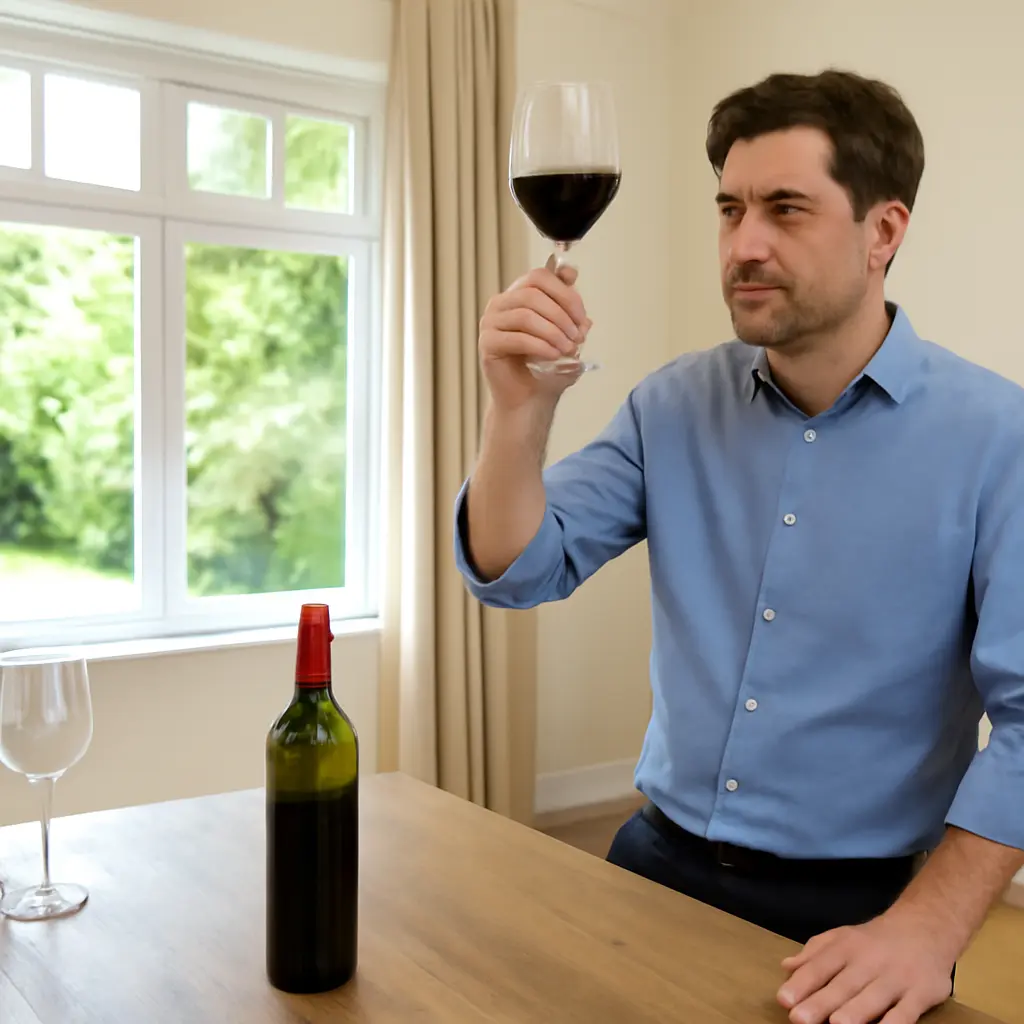
A practical assessment combines visual inspection with aroma and taste. Pour a small amount into a clear glass, view it against a pale background, and note whether the brown tone is limited to the rim or extends through the wine. Then smell and taste a small sip. These observations do not diagnose every wine fault, but they provide better evidence than color alone.
A quick sensory check
- Consider the wine’s age, grape variety, style, and storage history.
- Look for a gradual garnet or brick-colored rim versus an unexpectedly dull brown appearance throughout.
- Smell for fresh or developed aromas, and note whether fruit has been replaced by flat, bruised, or stale notes.
- Taste a small amount. A pleasant, balanced wine may be mature; a lifeless, harsh, or unpleasant wine may be past its best.
When to stop and seek another opinion
Do not drink a wine that smells strongly of vinegar, solvent, mold, or another unmistakably unpleasant odor. These signs may point to a fault or contamination, although appearance alone cannot establish whether a wine is unsafe. If a valuable or old bottle is in question, ask a knowledgeable wine professional to assess its provenance and condition before opening or decanting it. For an ordinary bottle, trust the sensory result: if the smell or taste is unpleasant, there is little reason to continue drinking it.
Conclusion: Read the Wine, Not Just Its Color
Red wine can become garnet, brick, or slightly tawny as it matures, while excessive oxygen exposure and poor storage can also turn it brown. Color offers an initial clue about change, but it cannot independently prove age, quality, or spoilage. Consider the wine’s style and history, distinguish liquid color from sediment, and use aroma and taste to complete the assessment. If you have a brownish bottle, inspect it carefully and decide by the whole sensory picture—not the hue alone.
Sources: University of California, Davis, Department of Viticulture and Enology, “Wine Chemistry”; https://wineserver.ucdavis.edu/industry-info/enology; Australian Wine Research Institute, “Managing Oxygen in the Winery”; https://www.awri.com.au/industry_support/winemaking_resources/frequently_asked_questions/oxygen/; Wine & Spirit Education Trust, “How to Store Wine”; https://www.wsetglobal.com/knowledge-centre/blog/2020/november/26/how-to-store-wine/