
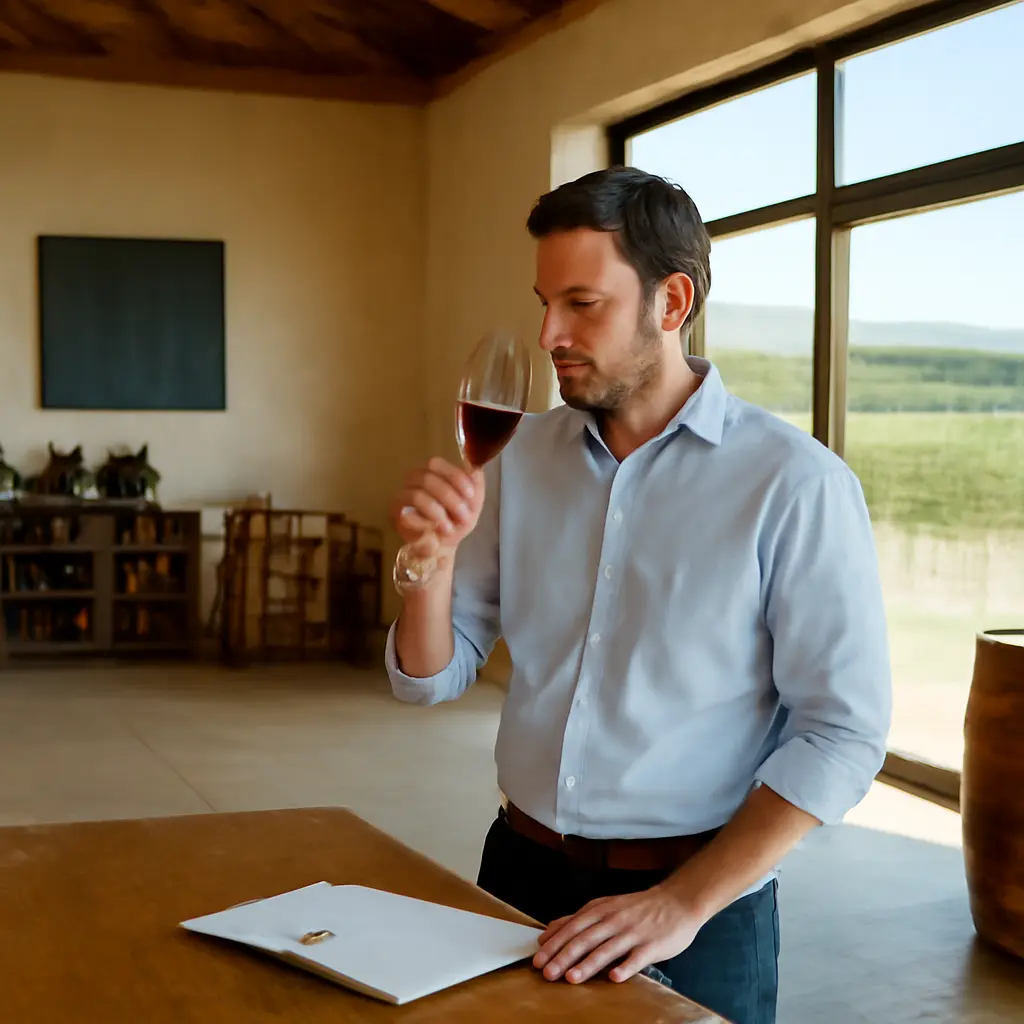
Tannin structure is the arrangement and behavior of wine’s phenolic compounds as they interact with saliva, other wine components, and time. Reading that structure helps estimate how a wine may develop: firm, fine-grained tannins and sufficient fruit, acidity, and concentration can support aging, while coarse, drying tannins without balancing material may remain harsh rather than soften. Tannins are not a reliable age predictor on their own, but their texture, source, and integration offer useful clues. The following guide explains what tannin structure means, how to assess it, how grape and winemaking choices shape it, and what real-world aging examples can—and cannot—tell us.
Tannin Structure Explains How Wine Feels and Develops
Tannins are a diverse group of phenolic compounds, especially flavan-3-ols and their larger polymers, found in grape skins, seeds, and stems; oak can also contribute ellagitannins during élevage. In sensory terms, tannin is best known for astringency: the drying, puckering sensation that arises in part when tannins interact with salivary proteins. Astringency is a tactile sensation, not simply a taste such as bitterness.
Wine researchers, including Andrew L. Waterhouse and Gavin L. Sacks in Understanding Wine Chemistry, describe wine phenolics as a complex family whose composition and reactions influence color, bitterness, astringency, and evolution. There is no single laboratory measurement that translates directly into “this wine will age for 20 years.” Total phenolics, tannin concentration, polymer characteristics, acidity, oxygen exposure, and the wine’s overall balance all matter.
This distinction matters commercially as well as sensorially. The International Organisation of Vine and Wine (OIV) reports global wine production and consumption in the tens of billions of liters annually, but only a small share of wine is made for extended cellaring. For drinkers deciding whether to open or store a bottle, careful tasting can therefore be more useful than assuming that a grape variety, price, or high tannin level guarantees longevity.
Tannin Texture Indicates a Wine’s Structural Balance
Tannin structure is the way tannins are distributed and perceived across the palate: their intensity, grain, persistence, and integration with fruit, acidity, alcohol, and body. Wine educator and author Jamie Goode, in Wine Science, emphasizes that wine’s sensory qualities emerge from interacting chemical and perceptual factors; astringency cannot be understood as a simple measure of tannin quantity.
A useful tasting description separates several related categories. “Fine-grained” or “silky” describes a relatively smooth tactile impression; “chalky” or “grippy” suggests a more noticeable, persistent drying feel; “coarse” or “rough” points to a less integrated sensation. These are descriptive terms, not standardized chemical classifications. Two wines with similar measured tannin concentrations may feel different because their tannin composition, acidity, alcohol, and other compounds differ.
Fine-Grained, Silky, and Powdery Tannins
Fine-grained tannins tend to feel even and relatively smooth rather than sharply abrasive. They may suggest that a wine is approachable, but they do not prove it is ready to drink or suitable for long aging. In a concentrated wine with fresh acidity and persistent fruit, fine tannins can be part of a balanced structure that develops gracefully. In a lighter wine with modest fruit and short persistence, the same smoothness may simply indicate early drinkability.
Grippy, Chalky, and Firm Tannins
Grippy or chalky tannins create a more noticeable drying sensation, often along the gums and inside the cheeks. Firmness can provide a framework for aging when fruit, acidity, and concentration are sufficient to balance it. But “firm” is not synonymous with “age-worthy”: if the palate feels hollow after the fruit fades, the tannin may become more exposed over time rather than more harmonious.
Coarse, Green, or Astringent Tannins
Coarse tannins feel rough, sharply drying, or persistently abrasive. Green or stemmy impressions can accompany tannins from less-ripe fruit or substantial stem inclusion, although ripeness and stem character are not reducible to one sensation. These features can soften or integrate, but no tasting cue guarantees that they will. When coarse astringency dominates and fruit is weak, long cellaring is a risky bet.
Texture is only one part of the assessment. To interpret it more accurately, consider where the tannins came from and how winemaking shaped their extraction.
Grape and Winemaking Choices Shape Tannin Structure
Grape variety, growing conditions, fruit maturity, and cellar decisions affect the type and amount of phenolics that enter a wine. Skins, seeds, and stems contain different phenolic profiles, and extraction depends on contact time, temperature, fermentation, cap management, and the physical condition of the fruit. Oak may add its own tannins, while also changing the wine’s exposure to oxygen.
This is why the same variety can produce wines with very different aging prospects. A grape’s reputation is a starting point, not a verdict. Pinot Noir, Cabernet Sauvignon, Nebbiolo, and Tannat, for example, can all yield markedly different structures depending on site, vintage, picking decisions, and cellar practice.
Skin, Seed, and Stem Tannins
Skin tannins are extracted during maceration and fermentation; seed tannins can enter the wine as seeds are exposed to alcohol and physical handling; stems contribute tannins and aromatic compounds when included. Their sensory effects vary with fruit maturity and extraction. A tasting impression alone cannot identify a tannin’s source with certainty, but a combination of firm grip, bitterness, and green or herbal notes can prompt questions about seed or stem contribution.
Maceration, Extraction, and Oxygen Exposure
Longer or more intensive maceration can increase phenolic extraction, though the result depends on temperature, cap management, fruit condition, and timing. Gentle extraction may yield a different texture from aggressive pressing or prolonged contact. During maturation, oxygen exposure can contribute to reactions among phenolics and other wine constituents; excessive oxygen, however, risks oxidation. These processes are complex, and no single cellar technique guarantees softer or longer-lived tannins.
Oak and Tannin Integration
Oak barrels can contribute ellagitannins as well as aromas and gradual oxygen exposure. The effect depends on oak species, barrel age, toast, size, and time in wood. New oak may make a wine seem firmer or more structured, but oak tannin does not automatically improve aging potential. The wine still needs enough fruit, acidity, and balance to carry its structure.
Once these sources and techniques are considered, the practical question is how to translate a tasting into a realistic aging judgment.
Tannin Structure Helps Estimate Aging Potential
Aging potential is a wine’s capacity to develop desirable characteristics while retaining balance. Tannin can contribute to that capacity, but it works alongside acidity, fruit concentration, alcohol, extract, sulfur dioxide management, closure, and storage conditions. The American Association of Wine Economists and wine-science researchers have documented that wine development involves multiple chemical reactions; bottle age is not a simple countdown in which tannins inevitably disappear.
Look for Balance, Not Maximum Tannin
A promising candidate for aging typically shows more than a strong grip. Look for sustained fruit, fresh acidity, flavor concentration, and a finish that remains coherent after the tannin is noticed. A wine with high tannin but little fruit or freshness may taste severe now and remain unbalanced later. Conversely, a wine with moderate tannin can age well if its components are proportionate and it is made and stored appropriately.
Distinguish Youthful Firmness from Persistent Harshness
Youthful firmness often sits within a wine that still has vivid fruit and a long, structured finish. Persistent harshness tends to dominate the palate, leaving a rough or bitter impression without enough flavor to support it. Tasting the wine with food can help reveal balance: protein and fat may reduce the perception of astringency, but this does not change the wine’s actual aging capacity.
Use Bottles and Storage Conditions as Evidence
The most reliable way to learn a wine’s development is to taste multiple bottles from the same producer, vintage, or case over time. Record date, storage conditions, fruit intensity, acidity, tannin feel, and finish. Keep bottles cool, dark, and temperature-stable; heat and temperature swings can accelerate deterioration. Since natural cork, technical closures, and screwcaps influence oxygen transmission differently, closure type is also part of the context rather than a simple quality ranking.
Real-World Examples Put Tannin in Context
Classic regions show why tannin must be read with the whole wine. Young Barolo made from Nebbiolo can show pronounced tannin and acidity, with aroma and flavor evolving over time; the Italian appellation’s production rules require a minimum period of aging before release, including time in wood. Yet bottle variation, producer style, vintage, and storage still affect how an individual wine develops.
Cabernet Sauvignon from Bordeaux or California may combine substantial tannin with concentrated fruit and acidity, but styles vary widely. A powerful, balanced wine can evolve for years, while a less concentrated example may be best enjoyed earlier. Meanwhile, many Beaujolais wines—especially lighter, fruit-forward styles—are designed for early enjoyment despite their capacity for short-term development. These examples show that variety and region provide context, not a guaranteed drinking window.
For visual comparison, a useful tasting chart can plot tannin intensity against fruit concentration and acidity, with wines placed according to tasting notes and producer guidance. Such a chart is a decision aid, not a scientific aging forecast: it should show that high tannin without supporting fruit or acidity is not equivalent to high aging potential.
Conclusion: Read Tannin as One Part of the Aging Picture
Tannin structure describes more than how drying a wine feels. Fine-grained, firm, grippy, and coarse tannins are useful sensory categories, while grape material, extraction, oak, and oxygen exposure help explain how that structure forms. Most importantly, tannin is only one factor in a wine’s evolution: fruit, acidity, concentration, balance, closure, and storage all contribute.
To judge a bottle, taste for texture and persistence, then ask whether the wine has enough fruit and freshness to support its tannins. Consult producer guidance, keep a tasting record, and compare bottles over time rather than relying on a single impression. For further reading, explore the OIV’s wine statistics and established wine-chemistry texts, then test the ideas against wines you know.
Sources: Andrew L. Waterhouse, Gavin L. Sacks, and David W. Jeffery, Understanding Wine Chemistry, https://www.wiley.com/en-us/Understanding+Wine+Chemistry-p-9781118627808; Jamie Goode, Wine Science: The Application of Science in Winemaking and Wine Appreciation, https://mitpress.mit.edu/978026253 ಕಂಪ/; International Organisation of Vine and Wine, State of the World Vine and Wine Sector, https://www.oiv.int/what-we-do/statistics; Consorzio di Tutela Barolo Barbaresco Alba Langhe e Dogliani, Barolo DOCG production regulations and information, https://www.langhevini.it/en/